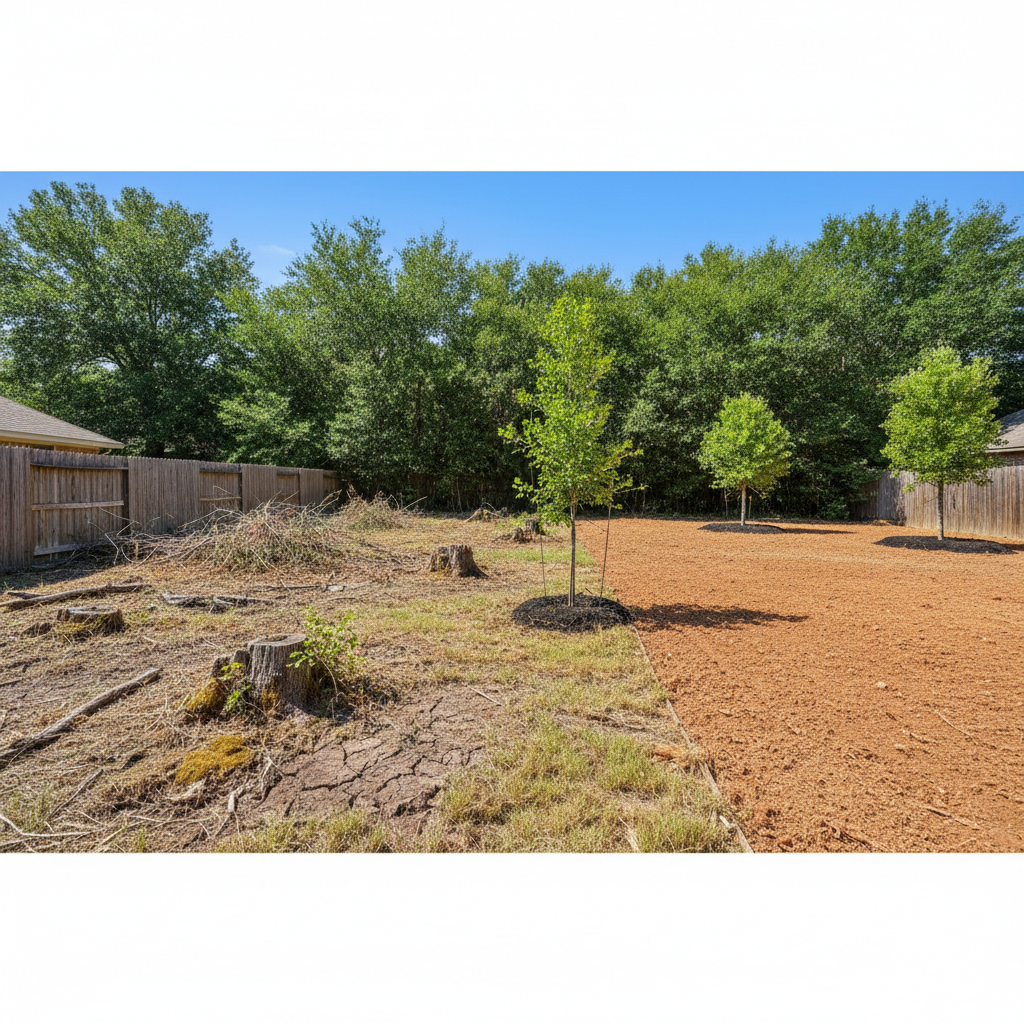
So, you've got some land in Converse. Maybe it's gotten a bit wild, or perhaps you're finally ready to expand your yard or put in that new shed. Whatever the reason, you're looking to clear it, and you've probably heard about a couple of ways to get that done: mechanical mulching or traditional dozing. As someone who's been doing this for years with Pacific Tree, I've seen both methods in action, and honestly, they each have their place. Let's figure out what's best for you, shall we?
Mechanical Mulching: The Modern Approach
When I talk about mechanical mulching, I'm usually picturing a specialized machine — often a skid steer or excavator — with a really powerful mulching head attached. This head grinds up all the brush, small trees, and undergrowth right where it stands, turning it into a nice, fine layer of wood chips.
Cost & Efficiency
At first glance, mulching might look a little pricier per hour than just pushing stuff around with a dozer. But here's the thing: it's often way faster for dense undergrowth and smaller trees. Plus, you're not paying for haul-off, which is a massive cost saver. No dump fees, no extra trucks, and definitely no burning permits (those can be a real headache, especially with the burn bans we get around here in Bexar County). For many properties, it's a one-and-done operation.
Durability & Maintenance
The biggest advantage here is what's left behind: a layer of nutrient-rich mulch. This isn't just good for your soil; it also helps keep new weeds from popping up. Sure, you'll still get some regrowth, especially from seeds already in the ground, but it's usually much less aggressive than what you'd see after dozing. The ground gets disturbed minimally, so you don't have to worry as much about erosion. That's a big deal if you're on a slope or have sandy soil, right?
Appearance
The finished product looks pretty clean. You get a natural, even layer of wood chips that just blends right into the landscape. It's not perfectly manicured, no, but it looks intentional and tidy, kind of like a well-maintained trail or a natural area.
Traditional Dozing: The Heavy-Duty Option
Traditional dozing means using a bulldozer to push over and clear vegetation. This method is all about raw power and moving a whole lot of material quickly.
Cost & Efficiency
Dozing can be super efficient for really large areas, especially if you're dealing with very big trees or need to move a lot of dirt. However, the cost often jumps significantly when you factor in what happens to all that pushed-over material. You'll either have to pay to have it hauled away, or you'll need to deal with burning it (if permits allow and conditions are safe), or burying it, which can impact how you use the land later.
Durability & Maintenance
When a dozer clears land, it often scrapes away the topsoil, really disturbing the natural ecosystem. This can actually lead to more aggressive weed growth because you've exposed new seeds to sunlight and removed the existing ground cover. You're also more prone to erosion, especially after those heavy rains we certainly get in Converse. The ground can be left uneven, too, requiring additional grading work.
Appearance
The land can look a bit stark after dozing. You'll often see bare earth, possibly with big piles of debris if it hasn't been hauled off. It looks more like a construction site than a natural clearing. If you're planning to build or immediately landscape, this might be fine, but if you want a natural-looking area, it'll take a lot more work to get there.
Which One Should You Choose?
For most homeowners in Converse looking to clear brush, small trees, and undergrowth for a more usable yard or pasture, I almost always lean towards mechanical mulching. Here's why:
- Less environmental impact: It keeps your topsoil intact and returns nutrients to the ground.
- No haul-off or burning: This saves you a ton of money and hassle, believe me.
- Better long-term maintenance: The mulch helps suppress new growth, which means less work for you down the line.
- A cleaner, more natural look: It's ready for use or seeding much faster.
Now, if you're talking about clearing a large plot for a new foundation, or you've got massive, mature trees that need to come down and you're planning extensive earthwork, then a dozer might be part of the equation. But for general brush clearing, especially in residential areas like those out by Meadowland, mulching is often the smarter, more cost-effective, and environmentally friendly choice.
Before you decide, give us a call at Pacific Tree. We can come out, take a look at your specific property, and give you an honest assessment of what approach makes the most sense for your goals and your budget. We've got the right equipment and the experience to get it done right.