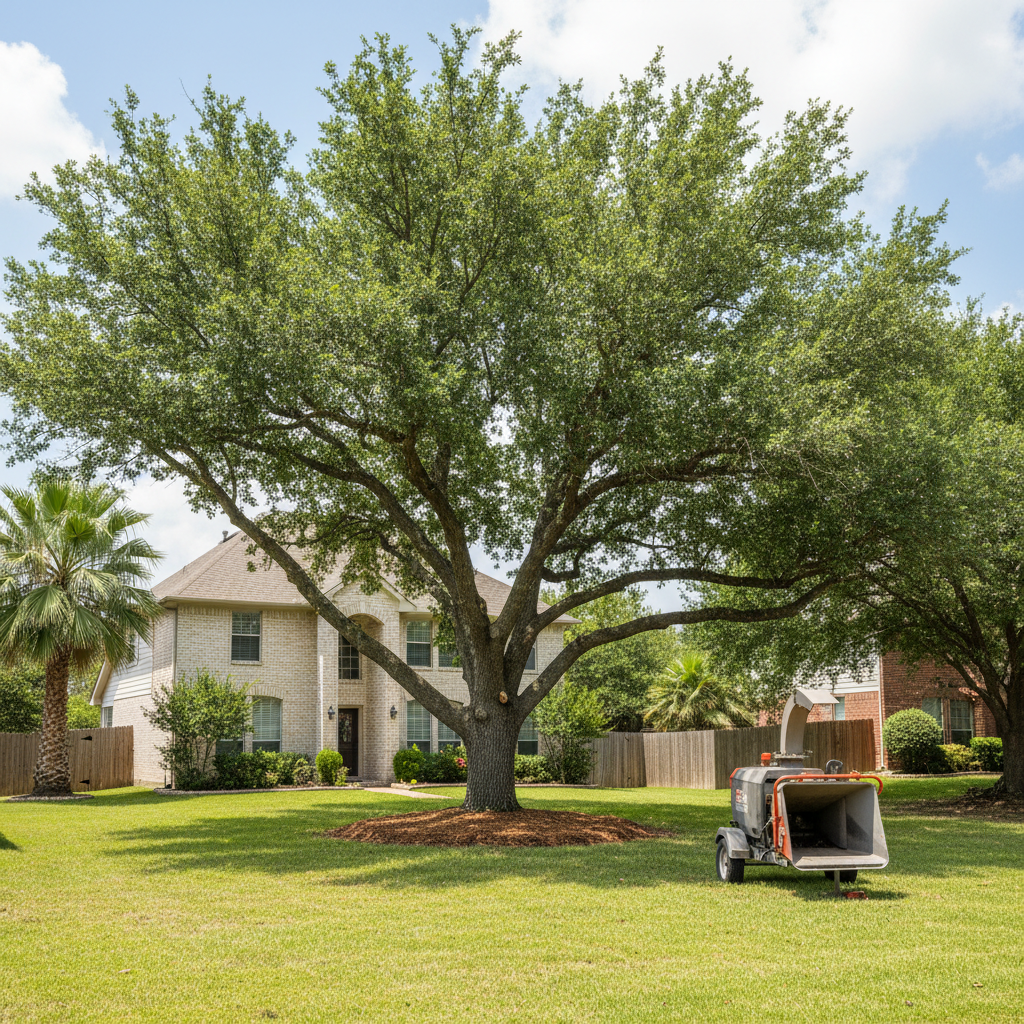
Alright, let's talk about Tree Trimming. You have put time and money into making your trees look good as well as healthy. You want that work to last. That is smart thinking, especially with our Texas weather. It is not just about making your yard look tidy. It is about keeping your trees strong against everything our Converse climate throws at them.
Extending the Life of Your Tree Trimming
When Pacific Tree trims a tree, we are not just cutting branches. We are setting it up for future growth as well as health. To make that work last, you have to think about the long game. Here is what our team tells folks in Converse:
- Right Cut, Right Time: This is important. If a tree is trimmed incorrectly, or at the wrong time of year, it can actually hurt it. For example, with our Live Oaks as well as Red Oaks in Converse, you absolutely want to avoid major pruning between February and June. That is prime time for oak wilt. Oak wilt is a nasty fungal disease that can spread through fresh cuts. Our team always seals oak wounds immediately with pruning paint, no matter the season. For most other deciduous trees, late winter when they are dormant is usually best for Tree Trimming. Pecan trees, our state tree, do best with pruning in late dormancy, like December through February, right before new buds form.
- Do Not Overdo It: Our team sometimes sees homeowners wanting to take too much off at once. For oaks, do not remove more than 20-25% of the live canopy in a single season. If a tree needs more than that, it is better to spread the work out over a couple of years. Over-pruning stresses the tree, making it vulnerable.
- Keep an Eye on Growth: After a good Tree Trimming, watch how your tree responds. You want to see healthy new growth. If you see a lot of suckers, which are those fast-growing shoots from the base, or watersprouts, which are upright shoots from branches, it can be a sign of stress or improper pruning cuts that need addressing.
Regular Maintenance for Healthy Trees
Think of it like taking care of your truck. Regular check-ups keep it running smooth. Your trees need the same attention in Converse. Pacific Tree recommends regular maintenance.
- Watering is Key, Especially Here: Converse gets hot. Droughts are not uncommon. Even mature trees need supplemental watering during dry spells. Deep watering, slowly, at the drip line, which is the edge of the canopy, is better than frequent, shallow watering. Mulch around the base helps a lot too. It keeps moisture in as well as regulating soil temperature. Our clay soils can hold water, but they can also get compacted. This makes it hard for roots to breathe.
- Inspect Regularly: Walk around your property in Converse once a month or so. Look up, look down. Are there branches rubbing together? Are there dead or broken limbs? Getting these removed promptly prevents bigger problems down the road.
- Clean Up Debris: If you have diseased branches, get them out of there. For oak wilt, infected debris should be chipped, burned, or buried quickly.
Warning Signs of Problems
Your trees will tell you when something is wrong. You just have to know what to look for. Our Texas climate, with its heat and occasional drought, can really take a toll on trees in Converse.
- Leaf Changes: Yellowing leaves, browning edges, which is called leaf scorch, wilting, or leaves dropping out of season are all big red flags. On Live Oaks, yellow veins that turn brown can be a sign of oak wilt. Red oaks might show leaves wilting and turning pale green or bronze.
- Branch Dieback: Dead branches, especially if they are scattered throughout the canopy, sometimes called 'flagging', can indicate disease or stress.
- Bark Issues: Cracks, peeling bark, or fungal growth on the trunk or branches are serious. Hypoxylon canker, common on stressed oaks as well as pecans, shows up as peeling bark with black spores underneath.
- Delayed or Stunted Growth: If a tree is not leafing out like its neighbors in spring, or if new growth is sparse or oddly shaped, it is probably stressed.
- Pest Infestations: Weakened trees are magnets for pests like bark beetles. Keep an eye out for holes, sawdust-like material, or other signs of insect activity.
When to Call a Professional
Look, Pacific Tree is a big believer in DIY where it makes sense. Some things are best left to the pros. That is where Pacific Tree comes in for your Tree Trimming needs. You should definitely give us a call if:
- You Suspect Oak Wilt: This disease spreads fast. It can wipe out a whole stand of oaks. If you see those specific leaf symptoms on your oaks, especially during the high-risk months, do not wait.
- Large or Dangerous Branches: Anything over your head, near power lines, or hanging over your house needs professional equipment as well as expertise. Do not risk it.
- Significant Dieback or Decline: If a large portion of your tree is dying, or it is just looking generally unhealthy and you cannot figure out why, an arborist from Pacific Tree can diagnose the problem as well as recommend a treatment plan.
- Storm Damage: After a big storm, trees can be unstable. We can safely assess as well as remove damaged limbs.
- You Are Not Sure: Honestly, if you are ever in doubt about the health of your tree or how to prune it, just call Pacific Tree. It is better to get an expert opinion early than to deal with a much bigger, more expensive problem later. We are here to help keep Converse beautiful, one tree at a time.