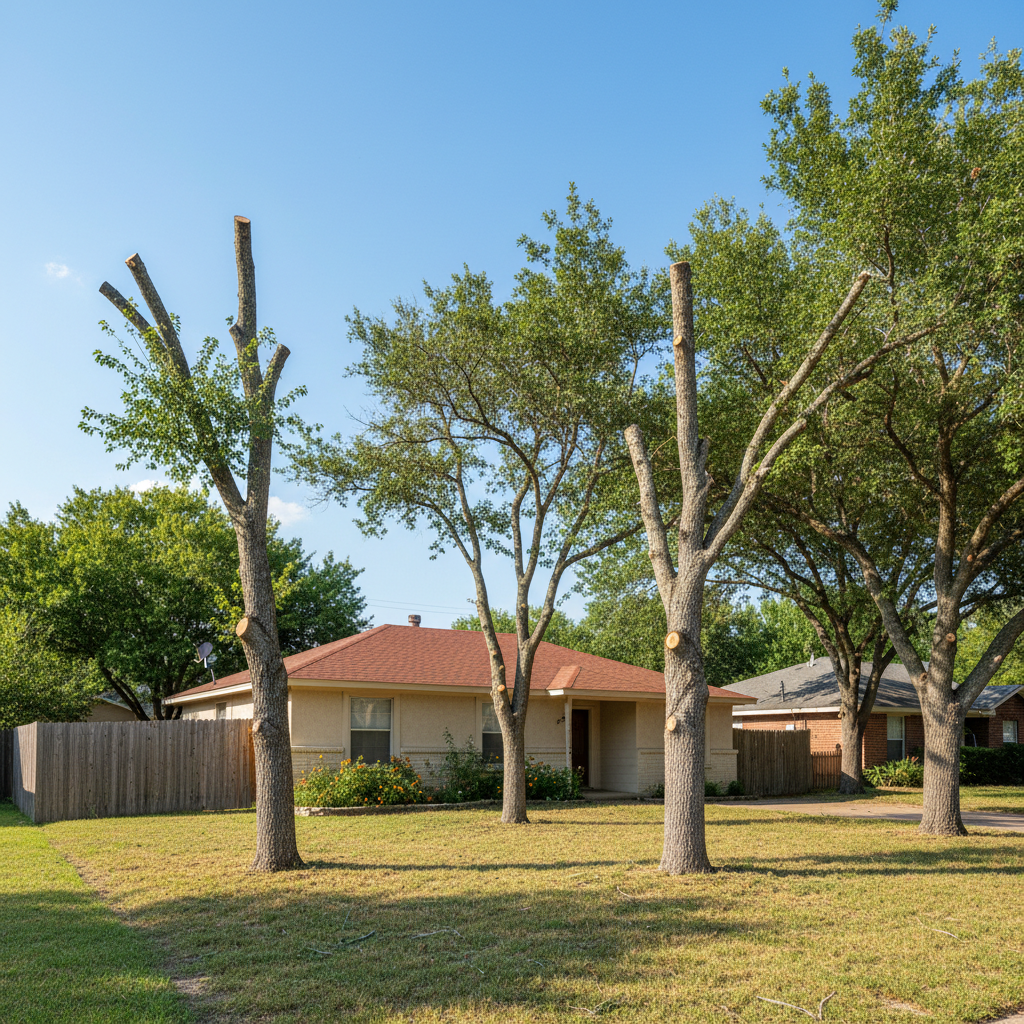
Let's talk about tree trimming costs here in Converse. I know, it's one of those things you don't really think about until a branch looks like it's about to crash onto your roof, or maybe your neighbor starts grumbling about that overgrown live oak. Then you pick up the phone, start calling around, and the prices? They can feel like they're all over the place. So, what's the real story?
What Makes Tree Trimming Prices Go Up or Down?
There's no single price for tree trimming, plain and simple. Anyone who gives you one without actually seeing your trees is just guessing, honestly. A few big things really drive the cost:
- Tree Size and Type: This is a huge factor. Trimming a small, easy-to-reach crepe myrtle will be way cheaper than tackling a massive, mature pecan tree, especially if it's 50 feet tall and hanging right over your house. Bigger trees mean more time, more specialized gear (like bucket trucks or climbing equipment), and more risk for my crew. Some tree types, like those with really dense canopies or thorns, also just take more effort.
- Tree Condition and Health: If a tree is diseased, has a lot of deadwood, or its structure isn't quite right, that makes the job more complex. Dead branches, for instance, can be unpredictable and dangerous to remove. If we're just doing a routine maintenance trim on a healthy tree, it's usually pretty straightforward.
- Accessibility: Can we easily get our equipment to the tree? Is it sitting in your front yard with plenty of space, or is it squeezed between your house, a fence, and those prized rose bushes? Trees in tight spots, especially near power lines or structures, demand more precision and often require manual climbing, which adds both time and cost. For example, some of those older homes in the Meadowland neighborhood, with their mature trees, often have less open space around them, making access a real challenge.
- Scope of Work: Are we just doing a basic crown clean-out – you know, removing dead or weak branches? Or do you need a significant reduction in size, crown raising (taking off lower branches for clearance), or structural pruning? The more extensive the work, the more it'll cost.
- Debris Removal: Most quotes from reputable companies, and that includes Pacific Tree, will cover hauling away all the branches and wood chips. If you want to save a few bucks and are willing to deal with the mess yourself, some companies might offer a slightly lower price. But, honestly, for most homeowners, it's usually not worth the headache.
- Emergency vs. Scheduled Work: If you call us out at 2 AM because a storm just split a branch and it's threatening your car, well, that's an emergency. And it's naturally going to cost more than a trim we schedule during regular business hours.
Typical Tree Trimming Cost Ranges in Converse
Alright, let's get down to some numbers. These are general ranges for typical residential trimming jobs, assuming good access and no major complications. Just remember, these are estimates; your specific situation could be higher or lower:
- Small Trees (under 25 feet): Think crepe myrtles, small ornamental trees, or young live oaks. You're generally looking at $150 - $450 per tree. Often, we can handle these with pole saws and ladders.
- Medium Trees (25-50 feet): This covers most mature shade trees like many oaks, hackberries, or smaller pecans. For these, expect to pay anywhere from $400 - $1,200 per tree. This is where we might start needing a bucket truck or skilled climbers.
- Large Trees (over 50 feet): Big, mature specimens like large live oaks, mature pecans, or bald cypress. These are complex jobs. Prices can range from $800 - $2,500+ per tree, especially if they're near structures or power lines. Sometimes, if it's a truly massive job, it can even push beyond that range.
If you have multiple trees, we can often give you a better per-tree rate since we're already on-site with our equipment and crew.
What Should Be Included in Your Quote?
When you get a quote, make sure it's detailed. A good quote from Pacific Tree, or any other reputable company for that matter, should clearly state:
- Specific trees to be trimmed: Which ones, and what type of pruning will be done (e.g.,